
When Progress Comes with Pain
As fitness professionals, we dedicate ourselves to helping clients move better, get stronger, and achieve their goals. We push them to progress, challenge their limits, and celebrate their milestones.
But what happens when progress comes with pain?
Every client starts a fitness journey for one reason—to improve. Whether it’s building strength, increasing endurance, or achieving a certain physique, the goal is progress.
Yet, somewhere along the way, the complaints start:
❌ “My knee feels off after squats.”
❌ “My lower back aches after deadlifts.”
❌ “I feel stiff and sore all the time.”
These complaints have become so common that they’re almost expected—seen as just part of the fitness process.
But here’s the truth: they are not random setbacks. They are patterns. And they all point to one missing element in fitness training—injury prevention.
Are We Trained to Prevent Injuries?
We’re taught how to design workouts, correct form, and program progressions. But how much of our training truly prepares us to prevent injuries?
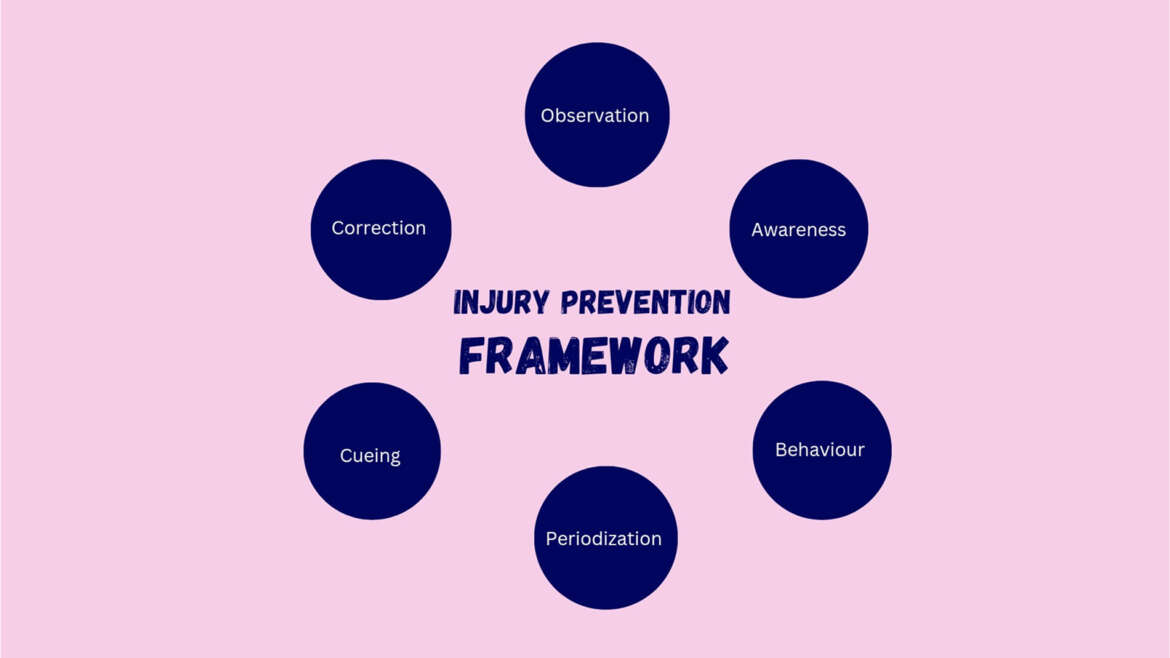
For most, injury prevention is reduced to warm-ups, stretching, and movement cues—all useful, but nowhere near enough. Preventing injuries requires a deeper level of understanding:
🔹 Recognizing red flags before they turn into problems
🔹 Understanding the body’s natural rhythm and recovery needs
🔹 Programming training that builds long-term resilience, not just short-term performance
Most fitness programs only focus on pushing forward. But progress without durability leads to breakdown. The missing questions in most training plans are:
✅ Is the client’s body adapting safely, or just compensating?
✅ Are they recovering properly—not just from workouts, but from daily movement stress?
✅ Are their joints and tissues truly ready for the next progression?
Without answers to these questions, trainers are programming blindly—hoping injuries don’t happen, rather than ensuring they don’t.
What Most Trainers Miss About Injury Prevention
Most trainers do what they can—adjust form, modify exercises, add mobility drills—but injuries still happen. Sometimes, it’s subtle wear and tear; other times, it’s a sudden, game-changing injury. And when a client gets injured, it’s not just their setback—it’s ours too.
Here’s where things go wrong:
1. It’s Not Just About Form
Even perfect technique doesn’t eliminate injury risk if the body isn’t conditioned for the movement. An unstable knee, weak core, or fatigued nervous system can lead to breakdowns—even with “correct” form.
2.Micro-Stresses Add Up
The way a client stands between sets, how they recover from workouts, their sleep cycle—these are the hidden causes of pain. Injuries don’t just happen from one bad rep; they result from hundreds of unnoticed mistakes over time.
3. Not Every Joint Needs Mobility
Some joints need stability, not mobility. Training them the wrong way can create weaknesses rather than fixing them. A well-meaning mobility drill for the lower back, for example, could make an already unstable lumbar spine even more vulnerable.
4. Periodization Matters More Than We Think
Training intensity shouldn’t just be about progressive overload. It should also align with a client’s:
✅ Natural rhythm (menstrual cycle, energy fluctuations, fatigue levels)
✅ Recovery state
✅ Structural readiness
If these aren’t factored in, progression turns into wear and tear, not strength gains.
Why This Should Matter to You as a Fitness Professional
Your clients trust you with their bodies. They come to you for results, but they stay with you because they feel safe under your guidance.
As trainers, our responsibility is not just to help clients lift heavier or run faster—but to ensure that they can keep training for life, without pain or setbacks.
The Future of Coaching: Smarter, Safer, More Effective
True fitness professionals don’t just aim for performance gains. They focus on long-term movement quality, resilience, and injury-proof training.
Those who understand how to build bodies that move well and stay injury-free stand out in the industry. And the ones who don’t? They’ll keep seeing clients stalled by pain, setbacks, and frustration.
The choice is clear: Real progress isn’t just about pushing harder—it’s about training smarter.